Place of Origin:
CHINA
Brand Name:
kacise
Certification:
CE,FDA
Model Number:
KBU601
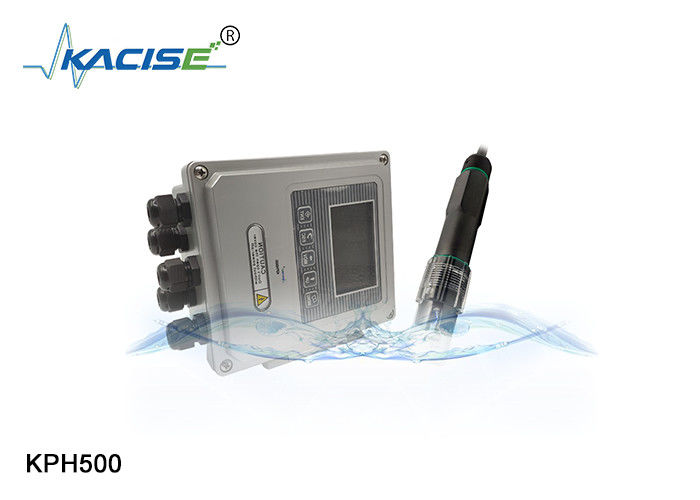
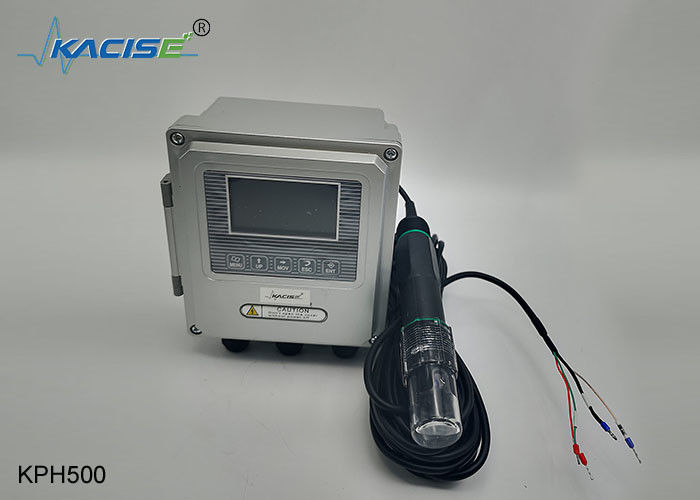
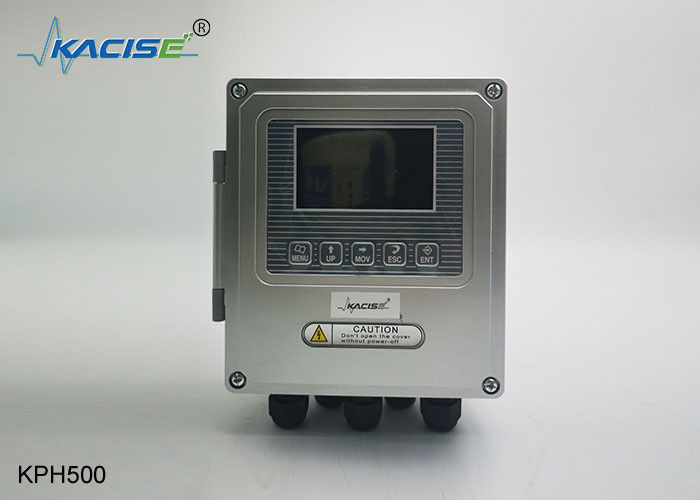
The PH/ORP meter is a high-precision instrument designed for detecting the pH and oxidation-reduction potential of liquids. It operates on the principle of a primary battery and features a microcomputer for user-friendly operation and easy maintenance. Resilient against interference from color, turbidity, colloidal substances, oxidants, and reducing agents, this meter is well-suited for analyzing various media such as clean water, wastewater, industrial water, and chemical reagents. It finds widespread applications in agriculture, environmental protection, and various industries.
The sensor is equipped with a composite electrode, effectively eliminating the impact of variable "K" values and ensuring long-term stability and accuracy in pH measurements. The internal structure of the sensor is depicted on the right.
The pH meter employs a potentiometric method to measure the pH of a solution. Beyond pH measurement, this device can also assess the electromotive force of a battery. pH, representing the activity of hydrogen ions in a substance, is the negative logarithm of the hydrogen ion concentration. The core components of a pH meter are the glass electrode, sensitive to pH, and the reference electrode, which maintains a stable potential.
Combining these two electrodes in the same solution creates a galvanic cell, and the potential of this cell is the algebraic sum of the potentials of the glass and reference electrodes. The reference electrode's potential in the pH meter remains stable. When the temperature is constant, the potential change of the galvanic cell, formed by the solution and the electrodes, is solely linked to the potential of the glass electrode. The potential of the glass electrode, in turn, is influenced by the pH value of the solution being measured. By measuring the potential change, the pH value of the solution can be determined.
| Class | Performance | PH parameter | OPR parameter |
| Host | Measuring range | 0-14PH | -2000mv-2000mv |
| Resolution | 0.01PH | 1mv | |
| Precision | 2% Calibration accuracy | ||
| Operating Temperature | Transmitter 0-65℃ | ||
| Material | PVC | ||
| Protection Level | I65/IP67(customized version) | ||
| Signal Output |
485 communication/4-20mA analog output/support HART protocol/NB.GPRS.LORA |
||
| Supply Voltage | AC220V or DC24V (choose one of the two) | ||
| Power Consumption | <1W | ||
| Display | LCD Chinese display/TFT color LCD (customized version) | ||
| Installation Method | Wall mount | ||
| Sensor | Temperature Compensation | Automatic temperature compensation | |
| Protection Level | ip68 | ||
| Temperature | 0-60℃ | ||
| Sensor Material | PVC | ||
| Cable Length | Dedicated PH cable, standard 5 meters (extendable) | ||
| Operating Temperature | 0-60℃ | ||
| Storage Temperature | -10-60℃ | ||
| Installation Method | Bracket drop-in installation | ||
| Ordering Information Selection Table | ||
| KPH500 | PH/ORP analyzer | |
| Power supply | DC24V | |
| AC220V | ||
| Cable length | 5m | |
| 10m | ||
| 15m | ||
| 20m | ||
| Temperature compensation | Sensor without temperature compensation | |
| Sensor with temperature compensation | ||
| Signal output | Only 4-20mA | |
| Only 485 | ||
| Also with 4-20mA , 485 signal output | ||
| Special custom signal | ||
| KPH500-P-DC24V-5m-Sensor without temperature compensation-Only 485 | PH host, with DC24V adapter, cable between host and sensor,The cable length is 5 meters, the sensor is equipped without temperature compensation, and is only 485 communication. | |
| KPH500-R-AC220V-10m-Sensor with temperature compensation-Only 485 |
Optional ORP host, with 220V adapter, line between host and sensor |
|
Oxidation-Reduction Potential (ORP) measures the oxidizing properties of any sanitizer (chlorine) present in the water. ... ORP is probably the most common method used by chemical controllers to measure sanitizer level, and the most inexpensive type of system.
If there are lots of potent oxidizers around, and not so many reducers, ORP rises because the electrode senses more oxidizing "power" in solution. Likewise, ORP drops if it senses more reducing power in solution. ... Often, ORP goes down as pH rises. A typical aquarium ORP reading will change on the order of 59 mv/pH unit.
Since the movement of electrons is electricity, ORP is measured in millivolts. Drinking water should have a rating of least -50 millivolts, but it's not often the case. Filtered water can have ORP values ranging from 357 to -25, depending on the brand and type of water. It's most often measured using an ORP meter.
A drop in the ORP indicates an increase in chlorine demand caused by reducing agents or contaminants entering the water. A decrease in ORP indicates that chemical reactions are about to occur. Compared to amperometric control, ORP is considered to be a more accurate measure of disinfection rate.2016年11月14日
A negative ORP reading indicates that a substance is a reducing agent. The lower the reading, the more anti-oxidizing it is. As such, a substance with an ORP reading of -400 mV is 4 times more anti-oxidizing than a substance with an ORP reading of -100 mV.
Send your inquiry directly to us