logo
Home > Products > Water Quality Sensor >
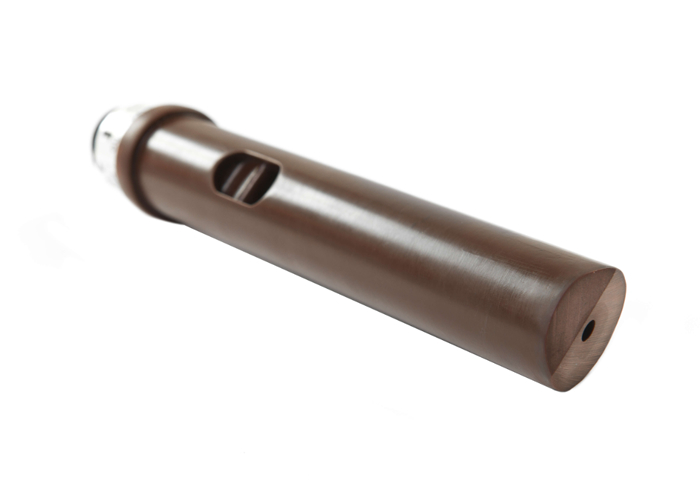
316 Stainless Steel 2-Electrode Conductivity Sensor with Pt1000 Temperature Element for Accurate Water Quality Measurement

316 Stainless Steel 2-Electrode Conductivity Sensor with Pt1000 Temperature Element for Accurate Water Quality Measurement

10 bar/142 PSIG Conductivity Sensor

150°C/302°F Water Quality Sensor

7 bar/100 PSIG Contacting Sensor

Brand Name:

Yokogawa

Model Number:

SC42/SC4A(J)

Contact Us
Request A Quote
Product Details
Materials Of Construction:
316 Stainless Steel Or Titanium
Design Sytle:
2-Electrode
Temperature Element:
Pt1000
Highlight:

10 bar/142 PSIG Conductivity Sensor

,

150°C/302°F Water Quality Sensor

,

7 bar/100 PSIG Contacting Sensor

Payment & Shipping Terms
Minimum Order Quantity
1pcs
Packaging Details
each unit has individual box and all boxes are packed in standard packages or customers requests available
Delivery Time
5-8 work days
Payment Terms
MoneyGram,Western Union,T/T,D/P,D/A,L/C
Supply Ability
1000 Piece/Pieces per Week negotiable
Product Description
Contacting Conductivity Sensors SC42/SC4A(J)
Why Measure Conductivity?

Conductivity serves as an economical, low-maintenance indicator of water quality. High-quality water with minimal contaminants exhibits low conductivity. Compared to pH measurement, conductivity requires far less maintenance and minimal calibration. Common applications include boiler feedwater, reverse osmosis (RO), and demineralizer systems.

Since conductivity increases with ion concentration (up to a point), it can correlate to percentage concentration values for solutions such as acids or bases. However, as conductivity is non-specific, percentage concentration measurement is only applicable to individual chemicals, not mixtures of multiple contributing chemicals.

Measurement Principles

Two primary sensor styles are used for conductivity measurement: Contacting and Inductive (Toroidal, Electrodeless).

Contacting sensors measure conductivity by applying an alternating electrical current to sensor electrodes (which together define the cell constant) immersed in a solution and measuring the resulting voltage. The solution acts as the electrical conductor between the sensor electrodes.

Factors Affecting Accuracy
  • Polarization: Can influence measurement accuracy
  • Contamination: Deposits or coatings on electrode surfaces of 2-pole cells can lower conductivity readings. These effects can be prevented with 4-pole conductivity cells.
  • Cable Resistance: Can introduce measurement errors and must be accounted for
  • Temperature: Conductivity measurements are temperature-dependent, with conductivity increasing as temperature rises
Product Selection
Model Code SC42 Large Bore SC4A(J) SC42 Small Bore
Cell Constants 0.01/cm; 0.1/cm; 1.0/cm 0.02/cm; 0.1/cm 0.02/cm; 0.1/cm; 1.0/cm
Ranges 0.02-2,000 µS/cm; 0.2-20,000 µS/cm; 2.0-200,000 µS/cm 0.04-400 µS/cm; 0.2-2,000 µS/cm 0.04-400 µS/cm; 0.4-2,000 µS/cm; 4.0-5,000 µ/cm
Temperature Element Pt1000 Pt1000 Pt1000
Pressure Rating 10 bar/142 PSIG 10 bar/142 PSIG 7 bar/100 PSIG
Maximum Temperature 150°C/302°F 110°C/230°F 100°C/212°F
Installation Connections Requires FD40, FS40 or FF40 Holder 3/4" NPT Fitting; 1", 1.5" or 2" Tri-Clamp; Retractable 3/4" NPT Fitting; 1", 1.5" or 2" Tri-Clamp
Integral Cable NO YES YES
Materials Of Construction 316 Stainless Steel 316 Stainless Steel or Titanium 316 Stainless Steel or Titanium
Design Style 2-Electrode 2-Electrode 2-Electrode

Send your inquiry directly to us

Privacy Policy China Good Quality Water Quality Sensor Supplier. Copyright © 2018-2026 Xi'an Kacise Optronics Co.,Ltd. . All Rights Reserved.