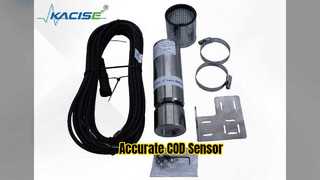
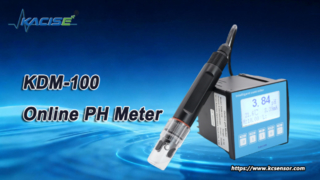
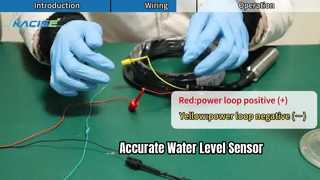
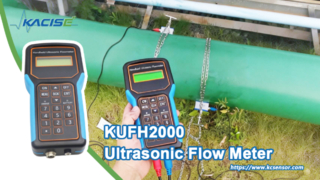
Brief: Need quick answers about practical use? This video highlights the essentials. Watch as we demonstrate the KWS-400 Optical Fiber Chlorophyll Sensor in action, showcasing its automatic cleaning system, installation methods, and real-time water quality monitoring capabilities.
Related Product Features:
Measures chlorophyll A concentration using fluorescence principle for accurate water quality assessment.
Features an automatic cleaning brush to prevent contamination and eliminate measurement-disrupting bubbles.
Digital sensor with RS-485 output supporting MODBUS protocol for seamless integration.
Enables direct, on-line continuous monitoring for real-time control of water quality dynamics.
Fiber optic structure ensures excellent repeatability and stability, unaffected by ambient light.
Available in two models: KWS-400A for standard use and KWS-400B with self-cleaning system.
IP68 protection rating allows underwater operation up to 60 meters for KWS-400A model.
Operates within a wide temperature range of 0-50°C for versatile environmental applications.
FAQs:
What is the measurement principle of the KWS-400 chlorophyll sensor?
The sensor uses fluorescence principle, where high-energy LED light stimulates chlorophyll A in water to produce specific wavelength fluorescence for concentration measurement.
What are the key differences between KWS-400A and KWS-400B models?
KWS-400A is a standard fiber chlorophyll sensor without self-cleaning, while KWS-400B includes an automatic cleaning brush system to prevent contamination and eliminate bubbles.
What is the maximum depth and temperature range for operation?
The KWS-400A can operate underwater up to 60 meters, while KWS-400B operates up to 10 meters. Both models function within a temperature range of 0-50°C.
What output and communication protocols does the sensor support?
The sensor provides RS-485 output and supports MODBUS protocol for easy integration with monitoring systems and data acquisition.